
❋ Africa · Guardian 8 of 64
Amara
Cassava — anchored in Central & West Africa (Angola, Congo, Nigeria).
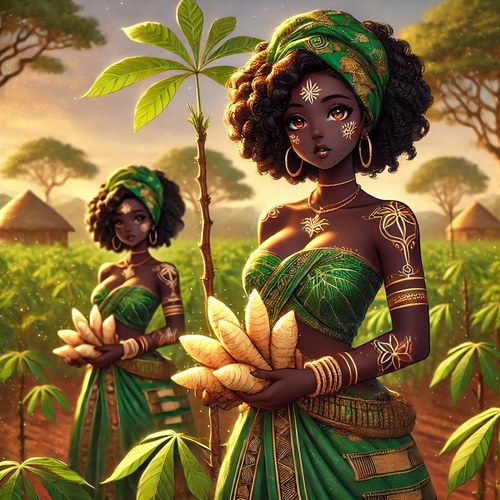
- Crop
- Cassava
- Cultural anchor
- Central & West Africa (Angola, Congo, Nigeria)
- Region
- Africa
Botanical origin vs. cultural anchor
For Amara in Africa, cassava is botanically rooted in western South America to Brazil; this entry centers Central and West African adaptation, processing, and staple-food knowledge after Atlantic-era crop movement.
Narrative
When Cassava is planted or prepared, Amara listens for the older knowledge inside the work: soil, water, tools, labor, and memory. The narrative keeps Cassava connected to Central & West Africa (Angola, Congo, Nigeria) while naming the routes that carried it elsewhere.
Origin
Amara carries Cassava as a memory object: not a trophy, but a teaching tool. The story starts in Central & West Africa (Angola, Congo, Nigeria) and moves outward through preparation, seasonality, and care.
Notes
Cassava in this African entry is a story of adaptation: processing knowledge, starch security, and the transformation of an American root into Central and West African food systems.
Add to the record
Know Cassava from the inside?
If this crop has a story where you are — a name it carries, a dish it belongs to, a recipe, a season, a source we should be citing — it belongs in this record. Amara’s entry, like every entry, is a living document: community knowledge is reviewed and incorporated into future editions.
When the collection launches
From Guardian to Garden
Nothing here is for sale yet. When the collection launches, 60% of proceeds will be reinvested directly into community-controlled programs — the split is already fixed by policy.