❋  Region · 14 guardians

Africa

African seed systems, dryland farming, river agriculture, tree crops, and diasporic foodways.

Watermelon Zahra Nubia / Ancient Egypt (Sudan, Egypt)

Botanical vs. cultural: Botanical origin: northeastern African drylands/East Sahara. Cultural anchor: Nubian, Egyptian, and wider African water-storage and seed traditions.

Narrative: In the Demystifying Food Origins universe, Zahra appears in dry-season fields when Watermelon is ready to be gathered, cooked, stored, or remembered. Their path turns Watermelon into evidence of climate, care, and cultural decision-making.

Origin: Zahra's first scene begins with a tree canopy, a season of ripening, and the long memory of orchards or groves. The guardian is anchored in Nubia / Ancient Egypt (Sudan, Egypt), but the story keeps origin open enough to include migration, exchange, and local stewardship.

Notes: Watermelon stores water in fruit and seed. Its African dryland story is not just sweetness; it is hydration, mobility, and survival in hot landscapes.


Okra Amina West Africa (Nigeria, Ghana, Benin)

Botanical vs. cultural: Botanical framing requires care: Kew lists Abelmoschus esculentus as native to South Asia, while okra's West African and Atlantic-diaspora culinary history remains central to this character's cultural identity.

Narrative: Amina's story follows Okra through river corridors, where taste is inseparable from land use, season, and inherited technique. The guardian asks viewers to see Okra as an archive of choices made across generations.

Origin: For Amina, origin is not a single discovery moment. It is a chain of growers, cooks, seed keepers, and landscapes that made Okra meaningful in relation to West Africa (Nigeria, Ghana, Benin).

Notes: Okra's mucilage thickens soups and stews, making texture part of memory. The pod's movement through African, Caribbean, and Southern U.S. kitchens shows how plants travel with technique.

Egusi (Melon Seed) Nia West Africa (Nigeria, Ghana)

Botanical vs. cultural: Egusi is a food category rather than a single botanical species; this entry centers West African seed selection, soup traditions, and household seed knowledge.

Narrative: When Egusi (Melon Seed) is planted or prepared, Nia listens for the older knowledge inside the work: soil, water, tools, labor, and memory. The narrative keeps Egusi (Melon Seed) connected to West Africa (Nigeria, Ghana) while naming the routes that carried it elsewhere.

Origin: Nia carries Egusi (Melon Seed) as a memory object: not a trophy, but a teaching tool. The story starts in West Africa (Nigeria, Ghana) and moves outward through preparation, seasonality, and care.

Notes: Egusi preserves food knowledge through seed. Grinding, roasting, storing, and stewing turn a small seed into a protein-rich architecture of West African cooking.

Hibiscus Imani West & Central Africa (Sudan, Mali)

Botanical vs. cultural: Cultural anchor: African and Afro-diasporic drinks, dyes, and healing traditions. Botanical framing may vary by species, especially roselle and related hibiscus types.

Narrative: Imani enters the story at the moment when Hibiscus becomes more than an ingredient. In compound gardens, the crop is transformed into meal, medicine, trade good, ritual object, or survival strategy.

Origin: The origin scene for Imani is built around stewardship. Hibiscus appears through color, aroma, healing, dye, and drink-making, asking the viewer to read agriculture as a practiced relationship rather than a static map label.

Notes: Hibiscus carries color, tartness, cooling, and ceremony. Its calyces move easily between medicine, beverage, market, and celebration.

Tamarind Zola Tropical Africa (Sudan, Kenya, Nigeria)

Botanical vs. cultural: Botanical origin is often framed within tropical Africa and nearby western Indian Ocean islands. Cultural anchor: tropical African agroforestry, medicine, shade, and exchange.

Narrative: Zola's route with Tamarind is not linear. Zola moves between cultivation, preservation, market exchange, and household teaching, revealing how Tamarind's origin is made through practice as much as geography.

Origin: Zola's story places Tamarind in conversation with Tropical Africa (Sudan, Kenya, Nigeria). Zola's task is to hold Tamarind's routes, uses, and caretakers together without collapsing them into one simplified origin claim.

Notes: Tamarind is a tree of shade and sourness. Its pulp balances stews, drinks, medicines, and trade, linking orchards to long-distance taste routes.

Fonio Tari West Africa (Guinea, Mali, Senegal)

Botanical vs. cultural: Botanical/cultural frame: West African domestication and Sahelian dryland grain systems; this entry aligns origin with cultural anchor.

Narrative: In the Demystifying Food Origins universe, Tari appears in grain paths when Fonio is ready to be gathered, cooked, stored, or remembered. Their path turns Fonio into evidence of climate, care, and cultural decision-making.

Origin: Tari's first scene begins with seed selection, storage, grinding, and the calendar of planting and harvest. The guardian is anchored in West Africa (Guinea, Mali, Senegal), but the story keeps origin open enough to include migration, exchange, and local stewardship.

Notes: Fonio matures quickly and tolerates difficult soils, making it a grain of patience and urgency at once. It is often framed as an old crop with future climate relevance.

Baobab Fruit Kesi Sahel Region (Senegal, Mali, Sudan)

Botanical vs. cultural: Botanical/cultural frame: African dryland tree ecologies, especially the Sahel and savanna belts, where fruit, leaves, bark, and shade hold social value.

Narrative: Kesi's story follows Baobab Fruit through dry-season fields, where taste is inseparable from land use, season, and inherited technique. The guardian asks viewers to see Baobab Fruit as an archive of choices made across generations.

Origin: For Kesi, origin is not a single discovery moment. It is a chain of growers, cooks, seed keepers, and landscapes that made Baobab Fruit meaningful in relation to Sahel Region (Senegal, Mali, Sudan).

Notes: Baobab refuses the scale of ordinary crops. It is tree, pantry, landmark, and gathering place, with fruit pulp, leaves, and bark carrying different forms of value.

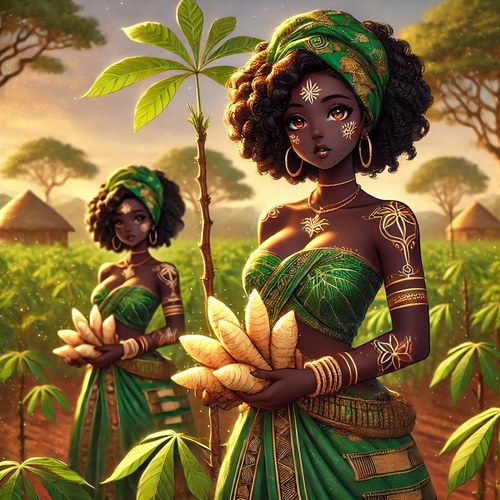
Cassava Amara Central & West Africa (Angola, Congo, Nigeria)

Botanical vs. cultural: For Amara in Africa, cassava is botanically rooted in western South America to Brazil; this entry centers Central and West African adaptation, processing, and staple-food knowledge after Atlantic-era crop movement.

Narrative: When Cassava is planted or prepared, Amara listens for the older knowledge inside the work: soil, water, tools, labor, and memory. The narrative keeps Cassava connected to Central & West Africa (Angola, Congo, Nigeria) while naming the routes that carried it elsewhere.

Origin: Amara carries Cassava as a memory object: not a trophy, but a teaching tool. The story starts in Central & West Africa (Angola, Congo, Nigeria) and moves outward through preparation, seasonality, and care.

Notes: Cassava in this African entry is a story of adaptation: processing knowledge, starch security, and the transformation of an American root into Central and West African food systems.

Celosia (African Spinach) Eshe West Africa (Nigeria, Ghana, Benin)

Botanical vs. cultural: Cultural anchor: West African vegetable gardens and stew traditions. Botanical framing should remain species-aware because celosia includes several cultivated leafy forms.

Narrative: Eshe enters the story at the moment when Celosia (African Spinach) becomes more than an ingredient. In savanna markets, the crop is transformed into meal, medicine, trade good, ritual object, or survival strategy.

Origin: The origin scene for Eshe is built around stewardship. Celosia (African Spinach) appears through garden leaves, cooking technique, medicine, and the hand-to-hand movement of everyday food knowledge, asking the viewer to read agriculture as a practiced relationship rather than a static map label.

Notes: Celosia keeps leafy-green knowledge visible: market bunches, garden plots, seed saving, and stews where vegetables carry both nutrition and identity.

Jute Leaf (Ewedu) Sade West Africa (Nigeria, Senegal)

Botanical vs. cultural: Cultural anchor: West African leaf-sauce traditions and everyday market gardens. Botanical origin varies by Corchorus species, so this entry emphasizes foodway continuity.

Narrative: Sade's route with Jute Leaf (Ewedu) is not linear. Sade moves between cultivation, preservation, market exchange, and household teaching, revealing how Jute Leaf (Ewedu)'s origin is made through practice as much as geography.

Origin: Sade's story places Jute Leaf (Ewedu) in conversation with West Africa (Nigeria, Senegal). Sade's task is to hold Jute Leaf (Ewedu)'s routes, uses, and caretakers together without collapsing them into one simplified origin claim.

Notes: Jute leaf is valued for more than flavor. Its slippery texture is a culinary technology, shaping soups, sauces, and shared standards of comfort.

Bambara Groundnut Zuri West Africa (Ghana, Mali, Nigeria)

Botanical vs. cultural: Botanical origin: northeastern Nigeria to South Sudan, with West African cultivation and naming histories central to this entry.

Narrative: In the Demystifying Food Origins universe, Zuri appears in tree groves when Bambara Groundnut is ready to be gathered, cooked, stored, or remembered. Their path turns Bambara Groundnut into evidence of climate, care, and cultural decision-making.

Origin: Zuri's first scene begins with a tree canopy, a season of ripening, and the long memory of orchards or groves. The guardian is anchored in West Africa (Ghana, Mali, Nigeria), but the story keeps origin open enough to include migration, exchange, and local stewardship.

Notes: Bambara groundnut matures underground and supports soil fertility. It is a legume of subsistence, dryland resilience, and often women-centered cultivation.

African Yam Oba West Africa (Nigeria, Benin, Togo)

Botanical vs. cultural: Botanical/cultural frame: West African yam systems, especially white Guinea yam and related Dioscorea traditions of storage, ceremony, and seasonal labor.

Narrative: Oba's story follows African Yam through grain paths, where taste is inseparable from land use, season, and inherited technique. The guardian asks viewers to see African Yam as an archive of choices made across generations.

Origin: For Oba, origin is not a single discovery moment. It is a chain of growers, cooks, seed keepers, and landscapes that made African Yam meaningful in relation to West Africa (Nigeria, Benin, Togo).

Notes: Yam is labor, storage, status, and season. In many West African contexts, the first yam marks a social calendar as much as an agricultural one.

Shea Fruit Nyah West Africa (Mali, Ghana, Burkina Faso)

Botanical vs. cultural: Botanical/cultural frame: African savanna belt tree systems; this entry emphasizes women-led processing, fruit use, and shea-nut economies.

Narrative: When Shea Fruit is planted or prepared, Nyah listens for the older knowledge inside the work: soil, water, tools, labor, and memory. The narrative keeps Shea Fruit connected to West Africa (Mali, Ghana, Burkina Faso) while naming the routes that carried it elsewhere.

Origin: Nyah carries Shea Fruit as a memory object: not a trophy, but a teaching tool. The story starts in West Africa (Mali, Ghana, Burkina Faso) and moves outward through preparation, seasonality, and care.

Notes: Shea links food and economy: fruit can be eaten, nuts can be processed, and butter can support medicine, cosmetics, cooking, and trade.

Sorghum Tafari East Africa & Sahel (Ethiopia, Sudan, Chad)

Botanical vs. cultural: Botanical/cultural frame: African dryland grain systems across northeastern Africa and the Sahel; this entry aligns drought tolerance with food security.

Narrative: Tafari enters the story at the moment when Sorghum becomes more than an ingredient. In river corridors, the crop is transformed into meal, medicine, trade good, ritual object, or survival strategy.

Origin: The origin scene for Tafari is built around stewardship. Sorghum appears through seed selection, storage, grinding, and the calendar of planting and harvest, asking the viewer to read agriculture as a practiced relationship rather than a static map label.

Notes: Sorghum bends toward drought rather than away from it. Its grain, stalks, fodder, and beverages show how one crop can serve many household needs.

Every purchase loops back

From Guardian to Garden

60% of proceeds are reinvested directly into community-controlled programs — including the farming and garden work these guardians celebrate.

Back to all regions
Support the work