
◈ South America & Mesoamerica · Guardian 32 of 64
Luna
Cassava — anchored in South America (Brazil, Venezuela, Colombia).
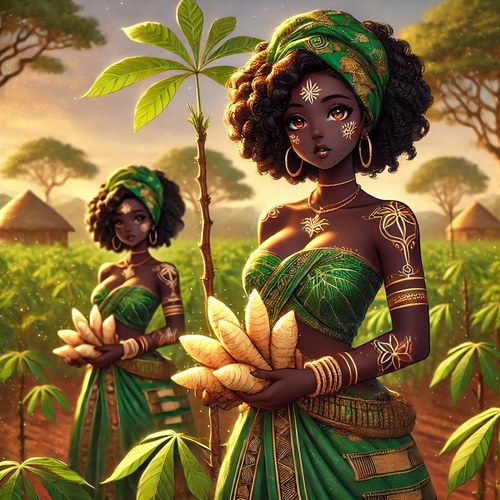
- Crop
- Cassava
- Cultural anchor
- South America (Brazil, Venezuela, Colombia)
Botanical origin vs. cultural anchor
For Luna in South America and Mesoamerica, cassava/yuca/manioc remains closest to its Indigenous American botanical and agricultural context, rooted in western South America to Brazil.
Narrative
In the Demystifying Food Origins universe, Luna appears in milpa fields when Cassava is ready to be gathered, cooked, stored, or remembered. Their path turns Cassava into evidence of climate, care, and cultural decision-making.
Origin
Luna's first scene begins with soil, careful processing, and the patient work of turning underground food into community sustenance. The guardian is anchored in South America (Brazil, Venezuela, Colombia), but the story keeps origin open enough to include migration, exchange, and local stewardship.
Notes
Cassava in this South American entry emphasizes domestication, detoxification, flour, bread, and the agricultural intelligence of yuca/manioc processing.
Add to the record
Know Cassava from the inside?
If this crop has a story where you are — a name it carries, a dish it belongs to, a recipe, a season, a source we should be citing — it belongs in this record. Luna’s entry, like every entry, is a living document: community knowledge is reviewed and incorporated into future editions.
When the collection launches
From Guardian to Garden
Nothing here is for sale yet. When the collection launches, 60% of proceeds will be reinvested directly into community-controlled programs — the split is already fixed by policy.