❋ Africa · Guardian 4 of 64
Imani
The Crimson Bloom of Vitality
Hibiscus — anchored in West & Central Africa (Sudan, Mali).
Addendum entry — drawn from the flashcard deck and pending review against the master compendium.
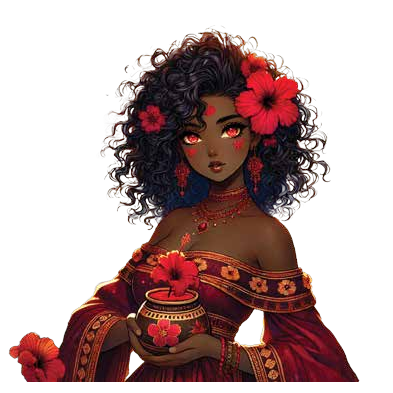
- Crop
- Hibiscus
- Cultural anchor
- West & Central Africa (Sudan, Mali)
- Region
- Africa
Botanical origin vs. cultural anchor
Hibiscus sabdariffa probably originates from Africa, where it may have been domesticated in Sudan about 6,000 years ago, first for its seed and later for leaf and calyx production. Cultural anchor: African and Afro-diasporic drinks, dyes, and healing traditions. Botanical framing may vary by species, especially roselle and related hibiscus types.
Narrative
Imani enters the story at the moment when Hibiscus becomes more than an ingredient. In compound gardens, the crop is transformed into meal, medicine, trade good, ritual object, or survival strategy.
Origin
The origin scene for Imani is built around stewardship. Hibiscus appears through color, aroma, healing, dye, and drink-making, asking the viewer to read agriculture as a practiced relationship rather than a static map label.
Notes
Hibiscus carries color, tartness, cooling, and ceremony. Its calyces move easily between medicine, beverage, market, and celebration.
Add to the record
Know Hibiscus from the inside?
If this crop has a story where you are — a name it carries, a dish it belongs to, a recipe, a season, a source we should be citing — it belongs in this record. Imani’s entry, like every entry, is a living document: community knowledge is reviewed and incorporated into future editions.
When the collection launches
From Guardian to Garden
Nothing here is for sale yet. When the collection launches, 60% of proceeds will be reinvested directly into community-controlled programs — the split is already fixed by policy.