✦  Region · 10 guardians

The Caribbean

Island foodways where Indigenous, African, and colonial crop histories meet and remake each other.

Guava Marisol Indigenous to Caribbean & Central America

Botanical vs. cultural: Botanical origin: tropical Americas. Cultural anchor: Caribbean and Central American orchards, preserves, fresh eating, and medicinal home use.

Narrative: Marisol's route with Guava is not linear. Marisol moves between cultivation, preservation, market exchange, and household teaching, revealing how Guava's origin is made through practice as much as geography.

Origin: Marisol's story places Guava in conversation with Indigenous to Caribbean & Central America. Marisol's task is to hold Guava's routes, uses, and caretakers together without collapsing them into one simplified origin claim.

Notes: Guava grows close to home: eaten fresh, preserved as paste or jelly, and used in folk medicine. It is orchard food with street-market memory.

Soursop Calista Indigenous to the Caribbean & Amazon Basin

Botanical vs. cultural: Botanical/cultural frame: tropical American fruit traditions across the Caribbean and Amazonian regions; this entry aligns origin and island use.

Narrative: In the Demystifying Food Origins universe, Calista appears in festival kitchens when Soursop is ready to be gathered, cooked, stored, or remembered. Their path turns Soursop into evidence of climate, care, and cultural decision-making.

Origin: Calista's first scene begins with a tree canopy, a season of ripening, and the long memory of orchards or groves. The guardian is anchored in Indigenous to the Caribbean & Amazon Basin, but the story keeps origin open enough to include migration, exchange, and local stewardship.

Notes: Soursop's soft flesh and aromatic leaves anchor juices, sweets, and remedies. Its story is botanical abundance filtered through island household practice.

Scotch Bonnet Pepper Amaya Caribbean Islands (Jamaica, Trinidad, Haiti)

Botanical vs. cultural: Botanical ancestry: Capsicum peppers are American crops; Scotch bonnet is a Caribbean cultivar identity shaped through island seed selection, heat, flavor, and preservation.

Narrative: Amaya's story follows Scotch Bonnet Pepper through storm-tested orchards, where taste is inseparable from land use, season, and inherited technique. The guardian asks viewers to see Scotch Bonnet Pepper as an archive of choices made across generations.

Origin: For Amaya, origin is not a single discovery moment. It is a chain of growers, cooks, seed keepers, and landscapes that made Scotch Bonnet Pepper meaningful in relation to Caribbean Islands (Jamaica, Trinidad, Haiti).

Notes: Scotch bonnet is flavor architecture: heat, fruitiness, fermentation, preservation, and identity in one small pepper.

Sugar Apple Isla Caribbean (Barbados, Jamaica, Cuba)

Botanical vs. cultural: Botanical/cultural frame: tropical American and Caribbean fruit systems; this entry emphasizes home gardens, markets, and sweet seasonal fruit.

Narrative: When Sugar Apple is planted or prepared, Isla listens for the older knowledge inside the work: soil, water, tools, labor, and memory. The narrative keeps Sugar Apple connected to Caribbean (Barbados, Jamaica, Cuba) while naming the routes that carried it elsewhere.

Origin: Isla carries Sugar Apple as a memory object: not a trophy, but a teaching tool. The story starts in Caribbean (Barbados, Jamaica, Cuba) and moves outward through preparation, seasonality, and care.

Notes: Sugar apple is a hand-held fruit of patience. Its segmented flesh asks the eater to slow down and remember seasonality.

Ackee Xiomara West Africa, brought to Jamaica

Botanical vs. cultural: Botanical origin: West and west-central tropical Africa. Cultural significance: Jamaican and wider Caribbean identity formed through Atlantic migration, coercion, and adaptation.

Narrative: Xiomara enters the story at the moment when Ackee becomes more than an ingredient. In yard gardens, the crop is transformed into meal, medicine, trade good, ritual object, or survival strategy.

Origin: The origin scene for Xiomara is built around stewardship. Ackee appears through a tree canopy, a season of ripening, and the long memory of orchards or groves, asking the viewer to read agriculture as a practiced relationship rather than a static map label.

Notes: Ackee must be known before it is eaten. Ripeness, opening, cleaning, and cooking turn safety into inherited expertise.

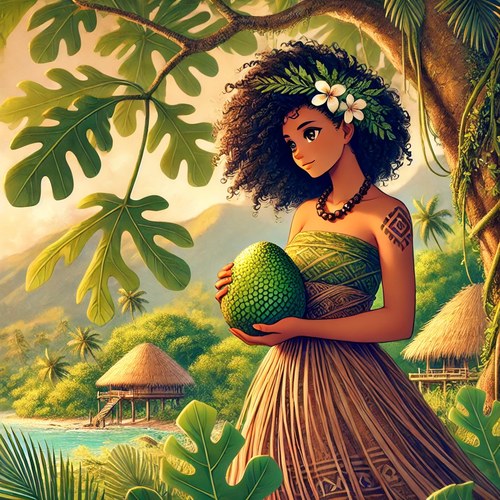
Breadfruit Nerissa Polynesia, introduced to the Caribbean

Botanical vs. cultural: For Nerissa in the Caribbean, breadfruit is botanically tied to the Pacific/Malesian-New Guinea breadfruit complex; the cultural story centers colonial-era transplantation and later island adaptation as a major starch.

Narrative: Nerissa's route with Breadfruit is not linear. Nerissa moves between cultivation, preservation, market exchange, and household teaching, revealing how Breadfruit's origin is made through practice as much as geography.

Origin: Nerissa's story places Breadfruit in conversation with Polynesia, introduced to the Caribbean. Nerissa's task is to hold Breadfruit's routes, uses, and caretakers together without collapsing them into one simplified origin claim.

Notes: Breadfruit in the Caribbean carries the politics of colonial transplantation, then island adaptation through roasting, boiling, frying, and everyday starch use.

Callaloo (Taro Leaves) Celeste Caribbean (Jamaica, Haiti, St. Vincent)

Botanical vs. cultural: Botanical note: taro is rooted in Asian/Pacific crop histories; Caribbean callaloo is a dish and leafy-green category shaped by African, Indigenous, and South Asian foodways.

Narrative: In the Demystifying Food Origins universe, Celeste appears in mountain farms when Callaloo (Taro Leaves) is ready to be gathered, cooked, stored, or remembered. Their path turns Callaloo (Taro Leaves) into evidence of climate, care, and cultural decision-making.

Origin: Celeste's first scene begins with soil, careful processing, and the patient work of turning underground food into community sustenance. The guardian is anchored in Caribbean (Jamaica, Haiti, St. Vincent), but the story keeps origin open enough to include migration, exchange, and local stewardship.

Notes: Callaloo is both plant and dish-language. It holds the meeting of leafy greens, African technique, Indigenous landscapes, and Caribbean improvisation.

Mammee Apple Solana Caribbean & Northern South America

Botanical vs. cultural: Botanical/cultural frame: Caribbean and northern South American tree-crop traditions; this entry aligns origin and cultural use.

Narrative: Solana's story follows Mammee Apple through festival kitchens, where taste is inseparable from land use, season, and inherited technique. The guardian asks viewers to see Mammee Apple as an archive of choices made across generations.

Origin: For Solana, origin is not a single discovery moment. It is a chain of growers, cooks, seed keepers, and landscapes that made Mammee Apple meaningful in relation to Caribbean & Northern South America.

Notes: Mammee apple carries the weight of old orchards. Its dense fruit supports preserves, desserts, and market traditions connected to Caribbean tree crops.

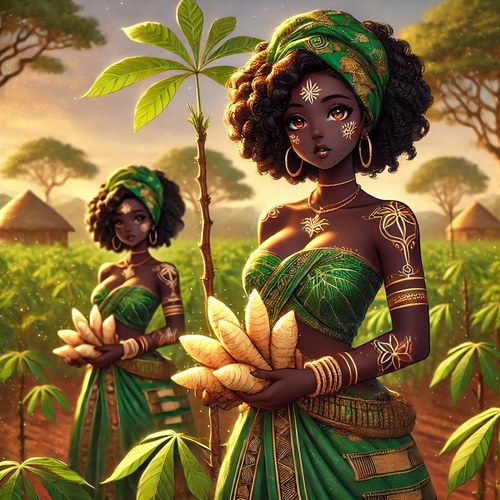
Cassava Luz Caribbean (Haiti, Dominican Republic, Puerto Rico)

Botanical vs. cultural: For Luz in the Caribbean, cassava is botanically rooted in western South America to Brazil; this entry centers Indigenous Caribbean continuities, Afro-Caribbean preparation, and island root-crop resilience.

Narrative: When Cassava is planted or prepared, Luz listens for the older knowledge inside the work: soil, water, tools, labor, and memory. The narrative keeps Cassava connected to Caribbean (Haiti, Dominican Republic, Puerto Rico) while naming the routes that carried it elsewhere.

Origin: Luz carries Cassava as a memory object: not a trophy, but a teaching tool. The story starts in Caribbean (Haiti, Dominican Republic, Puerto Rico) and moves outward through preparation, seasonality, and care.

Notes: Cassava in this Caribbean entry points to Indigenous continuity, grating, pressing, baking, and the survival value of root crops across island foodways.

Pigeon Peas Naomi Caribbean (Jamaica, Trinidad, Barbados)

Botanical vs. cultural: Botanical origin: Indian Subcontinent. Cultural significance: Caribbean rice dishes, soups, seasonal meals, and Afro-Caribbean/Indo-Caribbean foodways.

Narrative: Naomi enters the story at the moment when Pigeon Peas becomes more than an ingredient. In salt-air roads, the crop is transformed into meal, medicine, trade good, ritual object, or survival strategy.

Origin: The origin scene for Naomi is built around stewardship. Pigeon Peas appears through a tree canopy, a season of ripening, and the long memory of orchards or groves, asking the viewer to read agriculture as a practiced relationship rather than a static map label.

Notes: Pigeon peas feed soil and people. Fresh or dried, they turn rice, soups, and seasonal meals into nitrogen-fixing food memory.

Every purchase loops back

From Guardian to Garden

60% of proceeds are reinvested directly into community-controlled programs — including the farming and garden work these guardians celebrate.

Back to all regions
Support the work