Deconstructing Design is Currently Under Development!
Shifting Landscapes
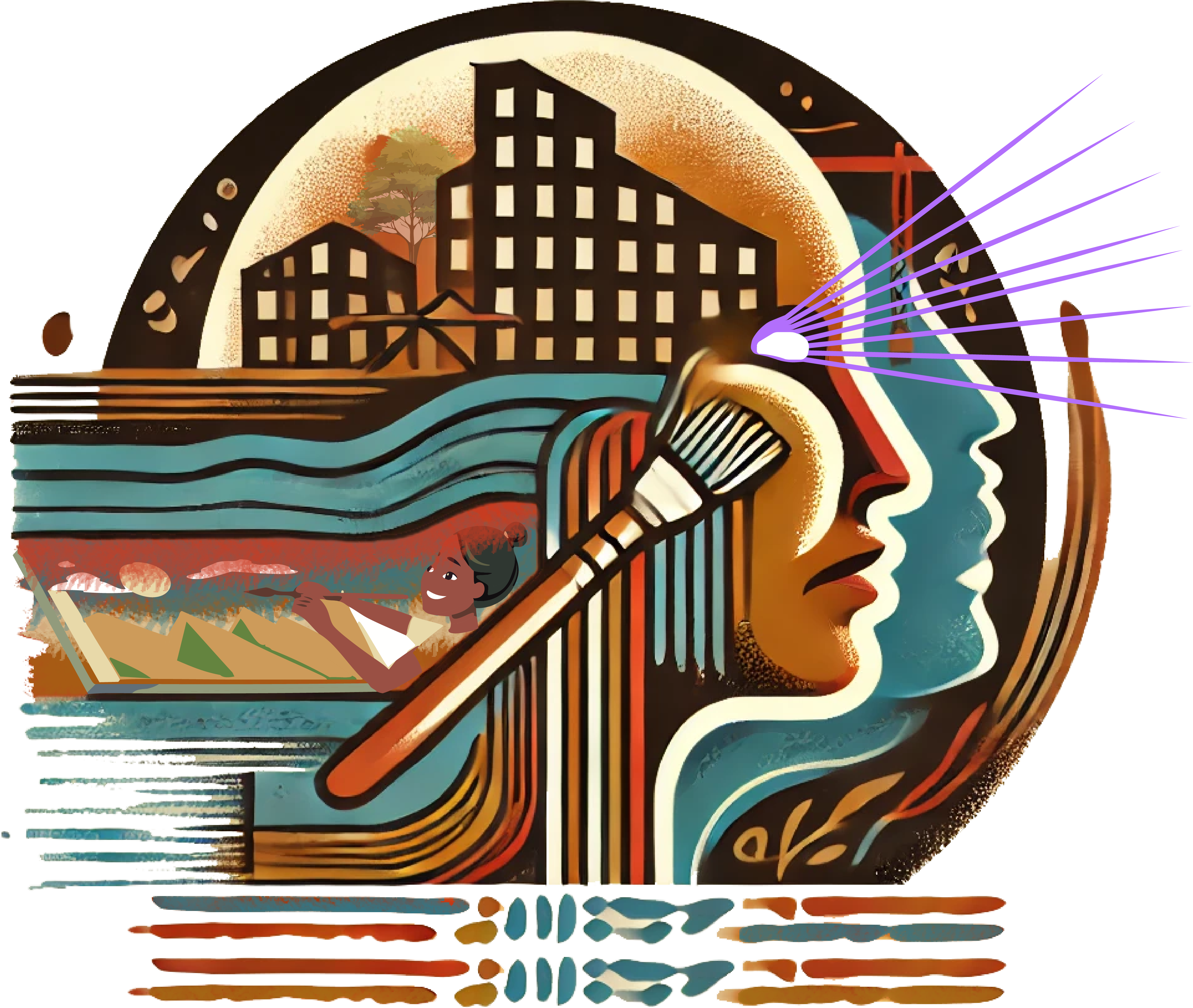
Shifting Landscapes delves into the complex interplay between land, power, policy, culture, and resilience. It examines the creation of ecologies of knowledge that continue to transform African American urban environments and drive the production of culture in opposition to constructed realities.
This project unravels the historical roots, sociopolitical forces, and cultural legacies that have shaped Black urban ecologies. It provides a comprehensive journey through the knowledge born from struggle and triumph within these communities. These 'chocolate cities'—vibrant urban centers rich in history and culture—not only symbolize our pursuit of justice, equality, and belonging but also serve as powerful information highways. They guide migration, provide cultural havens, and offer a sense of direction to people of African descent across the US, as they seek safety, opportunity, and community.
Learn more, visit this evolving project!
SHIFTING LANDSCAPES
Amplified Extraction: The Vibrations of Resistance
The past never really leaves us. It pulses beneath our present, not just as a memory but as a force that shapes who we are today. Themes of struggle, identity, and resilience are carried forward across generations, creating a continuous narrative that refuses to be silenced.
Through the powerful rhythms of sound, resistance and perseverance have always found a voice, toppling oppressive regimes and carrying messages across borders and eras. From the mournful wail of the blues, born from the deep struggles of African American communities, to the improvisational fire of jazz, and on to the raw, unapologetic energy of hip hop, music has been a vessel for the spirit of resistance and transformation. Amplified Extraction dives into this very spirit, exploring the evolution of sound through the music of South African jazz legend Abdullah Ibrahim. His jazz echoes the lineage of resilience, drawing on the blues and inspiring the next wave of defiant beats in hip hop.
Ibrahim’s music is more than just melody—it is a vessel of defiance, a sonic journey that transcends time and geography, amplifying the voices of those who came before and inspiring those who come next: the people who extract the meaning of the music, adjusting it to their tempo to bring about change in their urban context.
Urban Dispossession: Why Brooklyn?
Brooklyn stands at the epicenter of urban displacement, gentrification, and state-sanctioned land dispossession in New York City. Historically home to one of the largest Black urban populations in the United States, Brooklyn’s Black communities have been repeatedly targeted by intersecting waves of public policy and private speculation — from 20th-century redlining and urban renewal to present-day rezonings and tax lien sales. This project investigates how Brooklyn, more than any other borough, became the testing ground for development strategies that devalue Black life and extract Black wealth under the guise of progress.
Using a multidisciplinary approach grounded in policy analysis, oral histories, spatial mapping, and demographic data, the project traces how government actors (through zoning, eminent domain, and tax enforcement) and real estate capital have jointly reshaped Brooklyn over seven decades. These forces were not random or isolated — they formed a coordinated and evolving system of dispossession, often hidden behind bureaucratic terms like “blight,” “revitalization,” or “affordable housing.” The result is the ongoing erasure of historically Black neighborhoods like Bedford-Stuyvesant, Crown Heights, and East New York.
“Why Brooklyn?” is not just a geographic question. It’s a political and economic one. Brooklyn’s proximity to Manhattan, its undervalued land made so by systemic neglect, and its cultural richness made it both vulnerable and desirable. This project exposes how rising costs in Manhattan, supported by city and state planning decisions, have driven investment, displacement, and demographic inversion across Brooklyn — transforming it into a blueprint for racialized redevelopment.
Demystifying Food Origins
In East New York, where systemic barriers create unequal access to nutritious food, the community faces the harsh reality of food apartheid. One in four children experiences hunger, and a lack of green spaces exacerbates health disparities like obesity and chronic disease. Yet, within these challenges lies a fertile ground for transformation.
Our initiative addresses food apartheid by uniting community gardens, schools, and local organizations in a co-designed framework that empowers communities to take back control of their food systems. Central to our mission is demystifying food origins—an exploration of how food feeds our souls, fuels our bodies, influences politics, inspires art, and impacts every part of our lives. Knowing the history of food is power, and sharing this knowledge sparks community-wide change.
By integrating food education into classrooms and fostering hands-on experiences in community gardens, we reconnect students and residents with the story of what they eat—where it comes from, how it grows, and its role in shaping healthier lives and communities. These gardens don’t just grow food; they cultivate resilience, mitigate the urban heat island effect, and foster social justice. Together, we’re dismantling food apartheid and building a sustainable future where every neighborhood thrives. Let’s grow change, one seed at a time.